
ANALYSE MARKET BEHAVIOUR THROUGH QUANTITATIVE MODELS
BTi incorporates a range of proprietary quantitative models developed to analyse different financial markets. Each model processes thousands of market data points every day and generates a fully systematic theoretical portfolio of trades, used to monitor the model's behaviour over time.
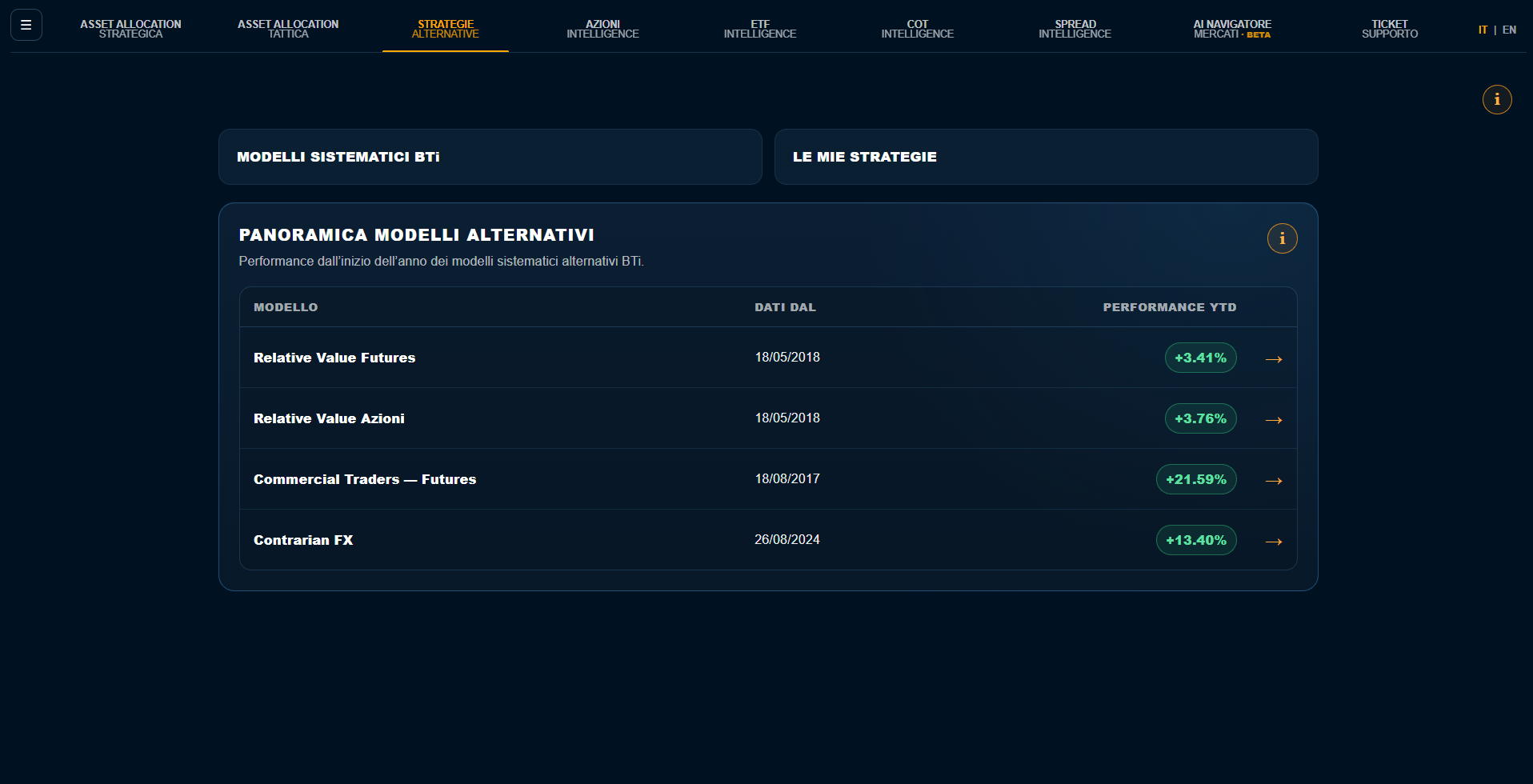
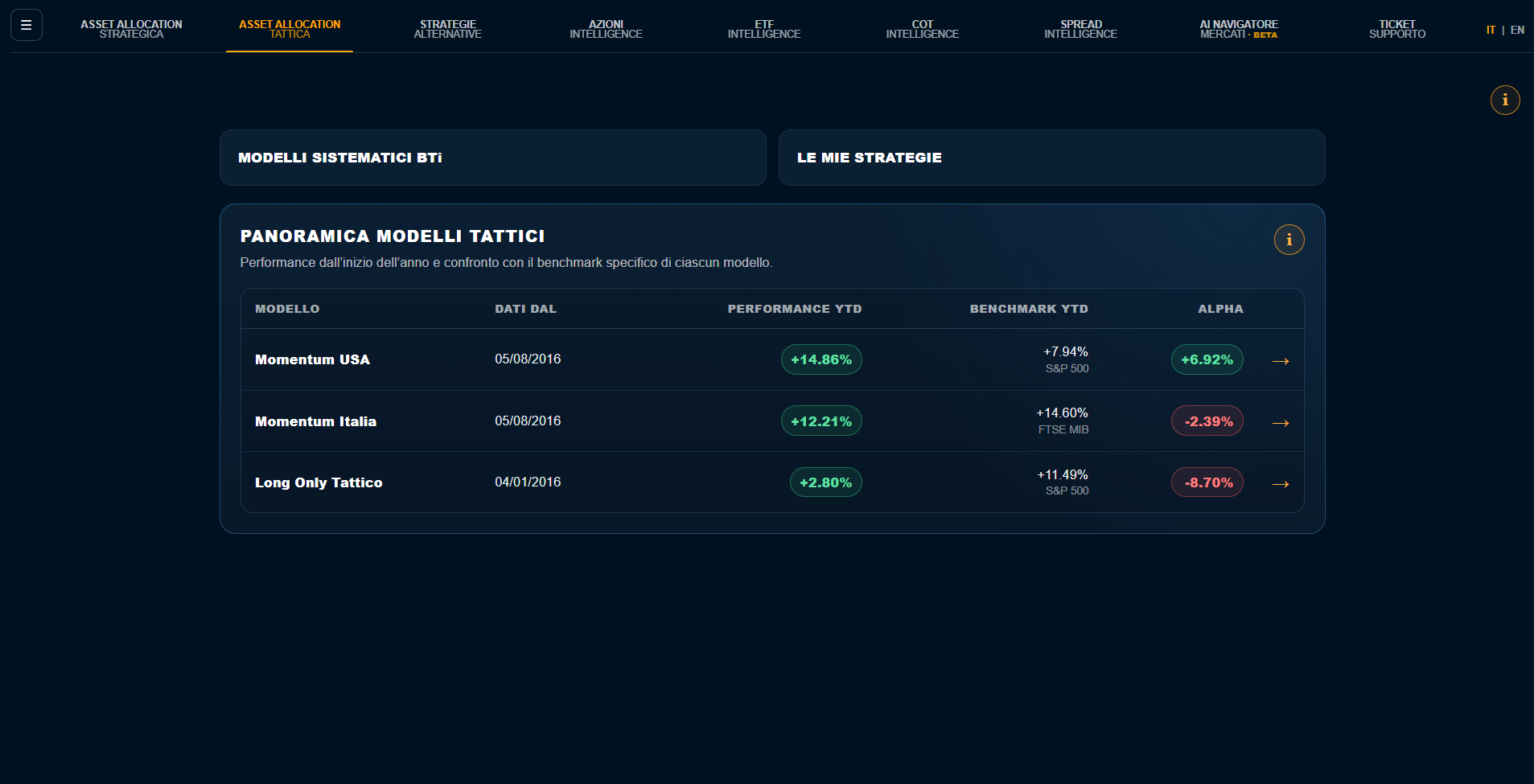
THEORETICAL MODELS FOR STUDYING MARKETS AND DIFFERENT QUANTITATIVE APPROACHES
BTi models are intended for research, analysis and educational exploration. The trades shown are theoretical and result solely from the automated application of predefined rules, without adjustments to an individual user's characteristics or objectives.
OBSERVE THE SYSTEMATIC APPLICATION OF MOMENTUM STRATEGIES
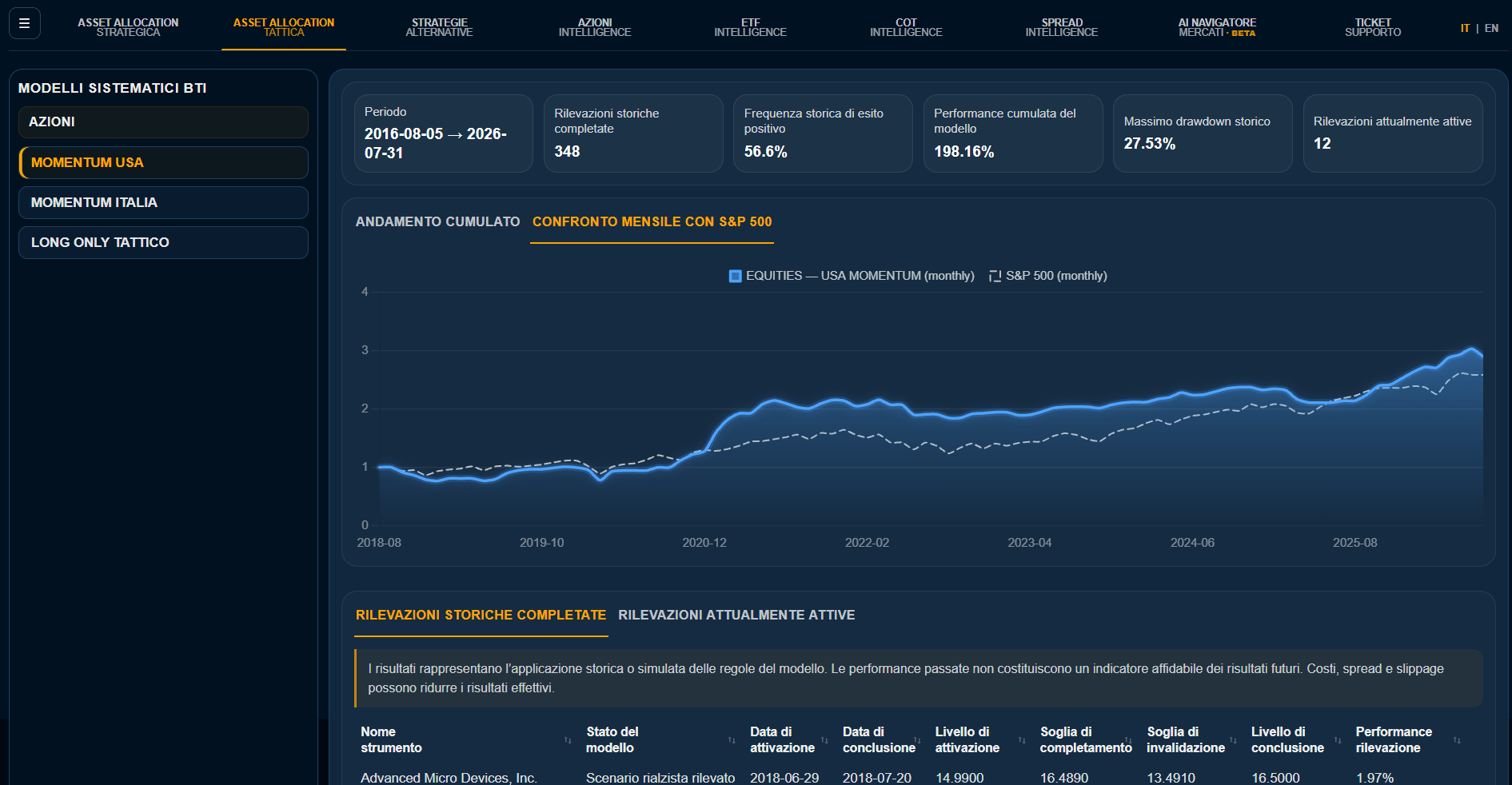
Tactical Asset Allocation models analyse equities and ETFs to identify instruments showing stronger short-term relative strength and resilience than their benchmark. The rules are applied automatically and consistently, without discretionary intervention.
The system builds and updates a theoretical portfolio daily according to the model's criteria, showing which instruments are monitored, which are included in the simulation and how the model has performed over time. The aim is to let users study the quantitative methodology and understand its characteristics, limitations and behaviour across market regimes.
STUDY DIVERGENCES BETWEEN PRICES AND THE BEHAVIOUR OF COMMERCIAL MARKET PARTICIPANTS
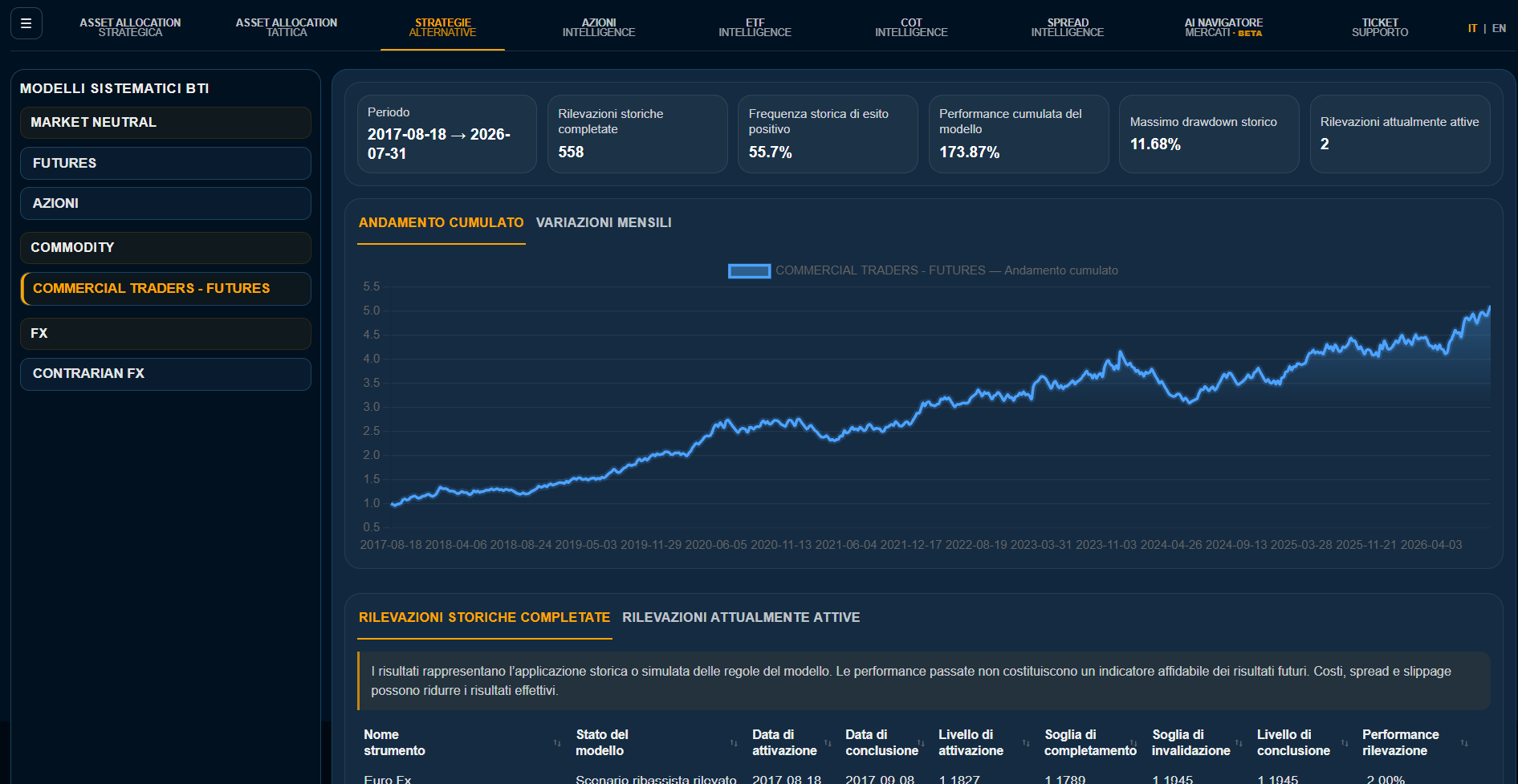
Systematic commodity models are applied to ETFs, ETCs and futures, using positioning data from companies and market participants directly involved in physical commodity markets. The system compares this information with price movements to identify statistically significant divergences.
When commodity prices behave significantly differently from the positioning of the producers, users or merchants of that commodity, the model updates its theoretical portfolio according to predefined rules. This allows users to observe how a quantitative methodology responds to different market configurations.
ANALYSE MODELS TAILORED TO THE CHARACTERISTICS OF FOREIGN EXCHANGE MARKETS
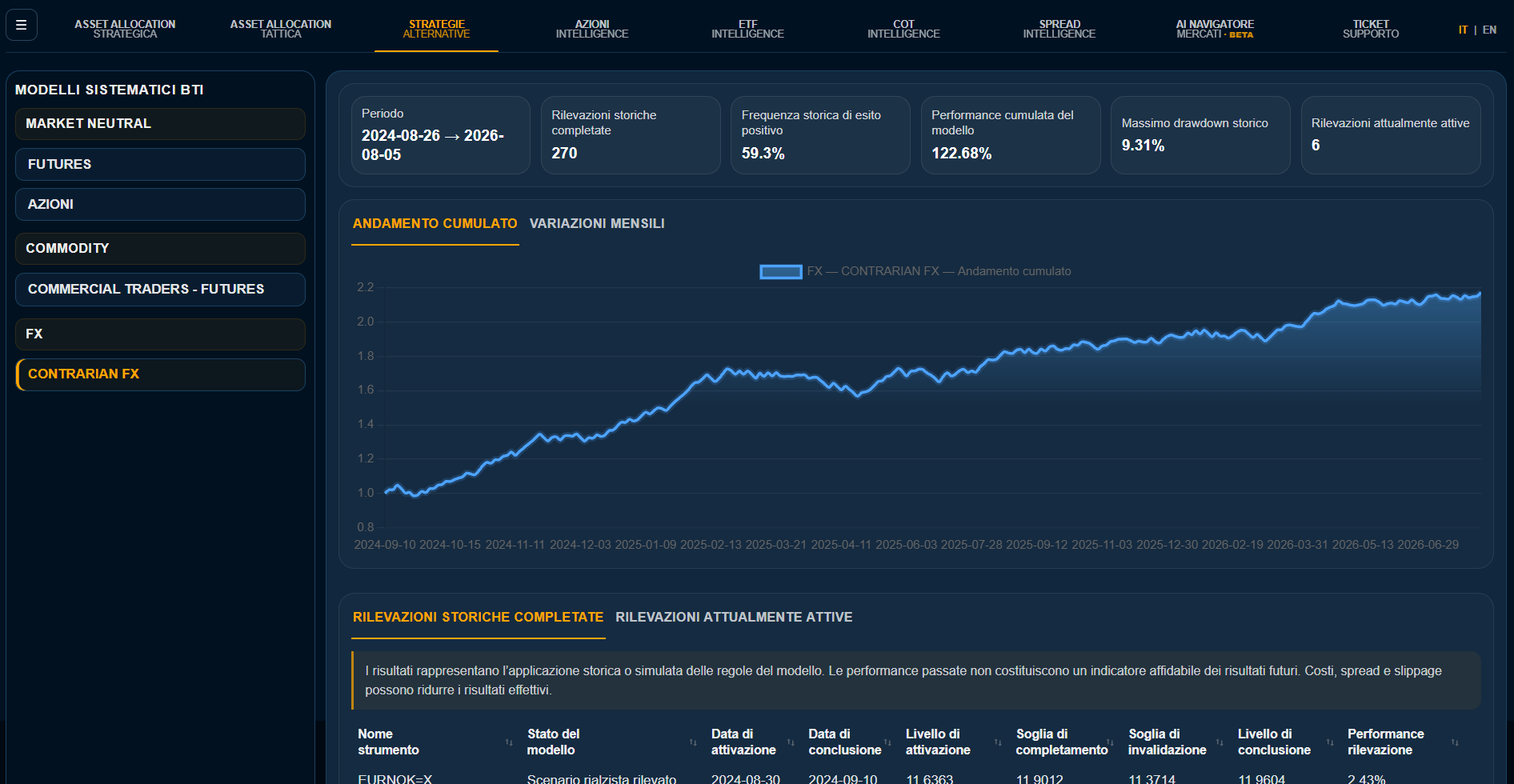
Currency markets often exhibit lower volatility and less persistent directional trends than other asset classes. For this reason, BTi uses theoretical models designed specifically to analyse relative dynamics, shifts in strength and statistical patterns between currency pairs.
The rules are applied systematically each day and generate a simulated portfolio that helps illustrate how the model responds to different volatility and trend regimes. Users can therefore study its behaviour without the system adapting its conclusions to their personal circumstances.
MONITOR THEORETICAL MODELS BASED ON STABLE STATISTICAL RELATIONSHIPS
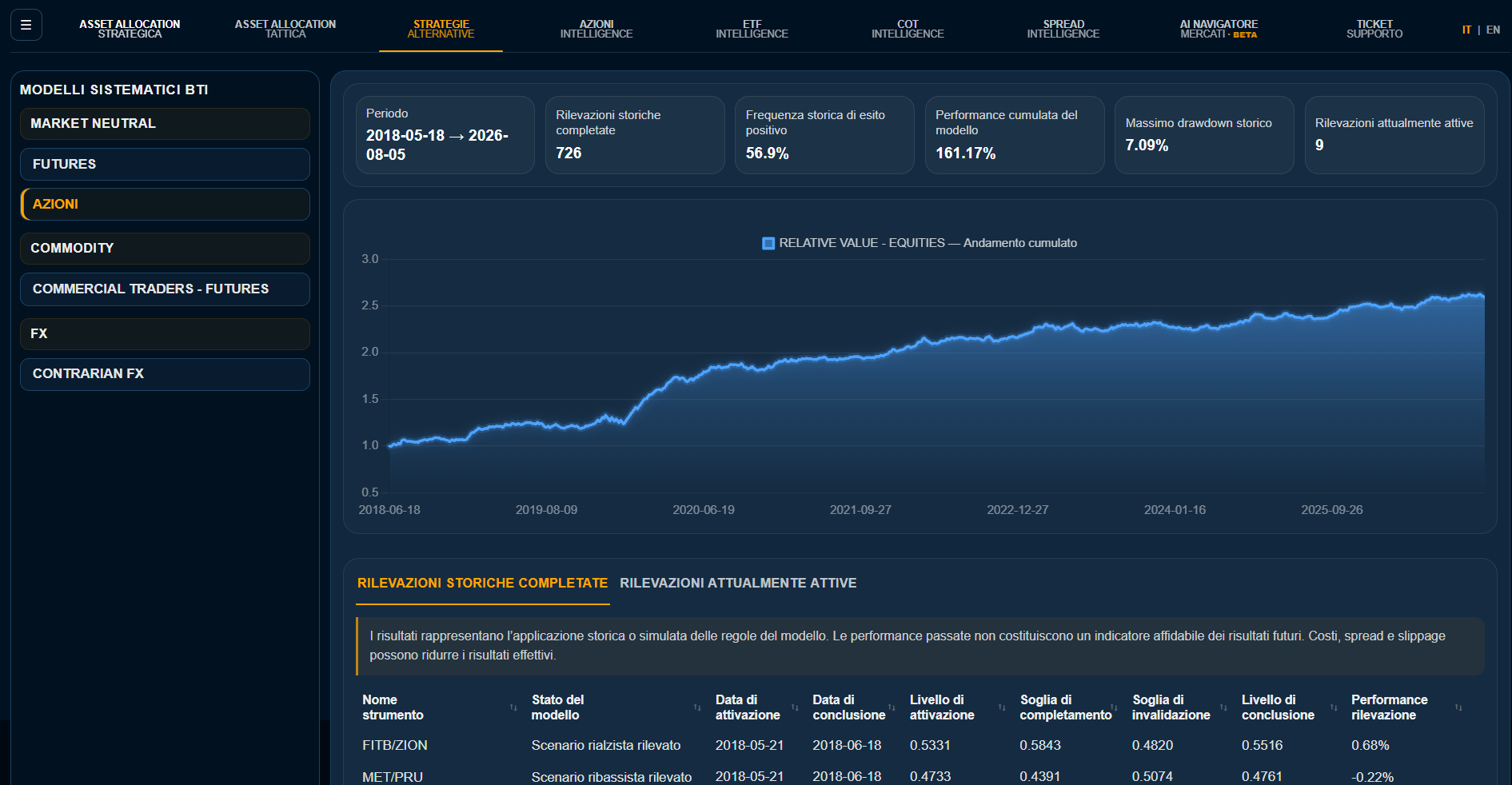
Systematic spread models analyse pairs of equities or futures that exhibit high cointegration and historically stable relationships. The system measures the size of the divergence between the two instruments each day and compares it with previously observed values.
When the deviation exceeds specified statistical thresholds, the model updates its theoretical portfolio according to predefined rules. The analysis focuses on the relative relationship between instruments rather than forecasting the overall direction of the market, offering a market-neutral perspective for study and research.
MONITOR QUANTITATIVE RULES DEVELOPED IN-HOUSE
In addition to the models already available in the platform, BTi can be used to integrate quantitative rules defined by users or their organisations. The rules are translated into a systematic process and monitored through a theoretical portfolio updated over time.
This functionality makes it possible to study a model's behaviour, assess its consistency, compare different phases and maintain an organised record of simulations. Integration is intended for analysis and monitoring and does not involve automated execution or personalised assessments of whether individual trades are appropriate.
STUDY MARKETS THROUGH TRANSPARENT, REPLICABLE QUANTITATIVE PROCESSES
BTi provides theoretical models and monitoring tools designed to support research, analysis and exploration of financial markets.